Language models (LLM)
Working with documentation: searching, summarising, preparing and verifying documents. Open models, e.g. Qwen or Mistral, run locally.
Solutions and algorithms trained on your company’s data and experience — running locally, without external providers.
Every task needs a different tool. In one local architecture we combine language models, machine learning, neural networks, mathematical models and expert knowledge — so that the result can be verified and understood by specialists.
Working with documentation: searching, summarising, preparing and verifying documents. Open models, e.g. Qwen or Mistral, run locally.
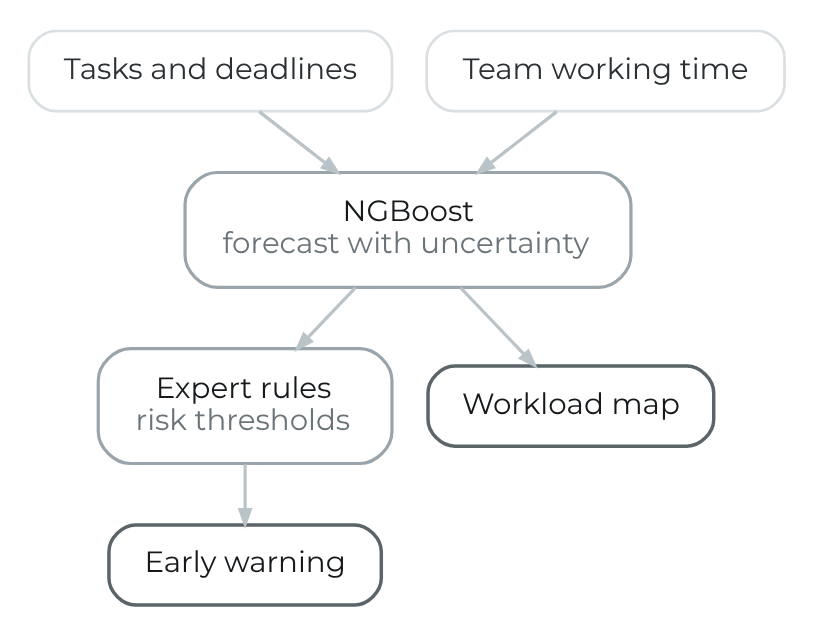
Prediction and classification on tabular and process data: gradient boosting, decision trees, NGBoost with forecast uncertainty.
Complex, non-linear relationships in data and generation of solution variants: deep learning and generative networks (GAN).
Recognition and interpretation of technical drawings, schematics, scans and images from the production process.
FEM and CFD simulations, optimisation and physical process models, computed on a local GPU.
Specialist knowledge, standards and industry rules captured as algorithms that check and explain model results.
The systems can work as standalone tools or be integrated with existing IT infrastructure, including through an API.
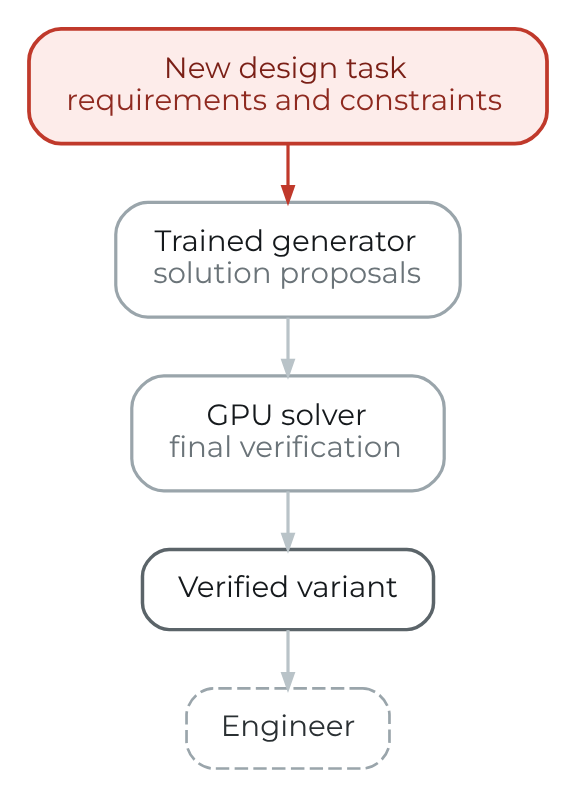
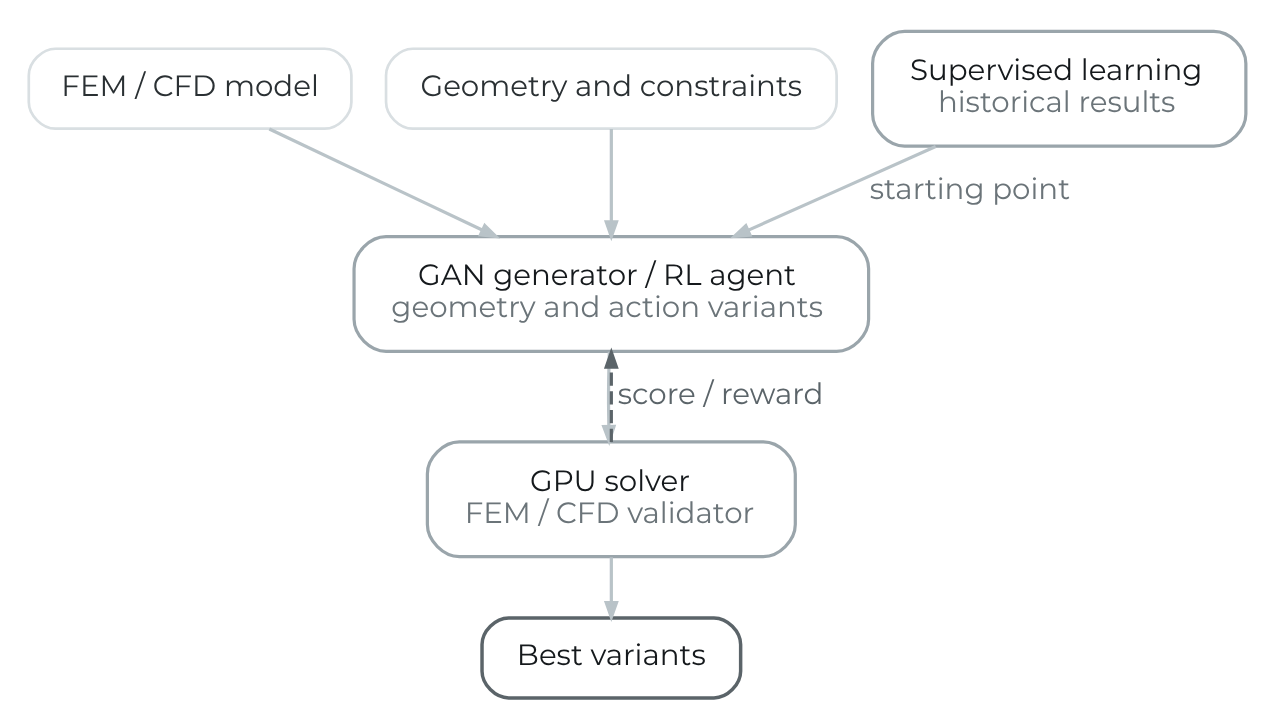
Based on an FEM / CFD model and the geometry, a generative network (GAN) or a reinforcement learning agent creates solution variants, and each of them is verified by our solvers.


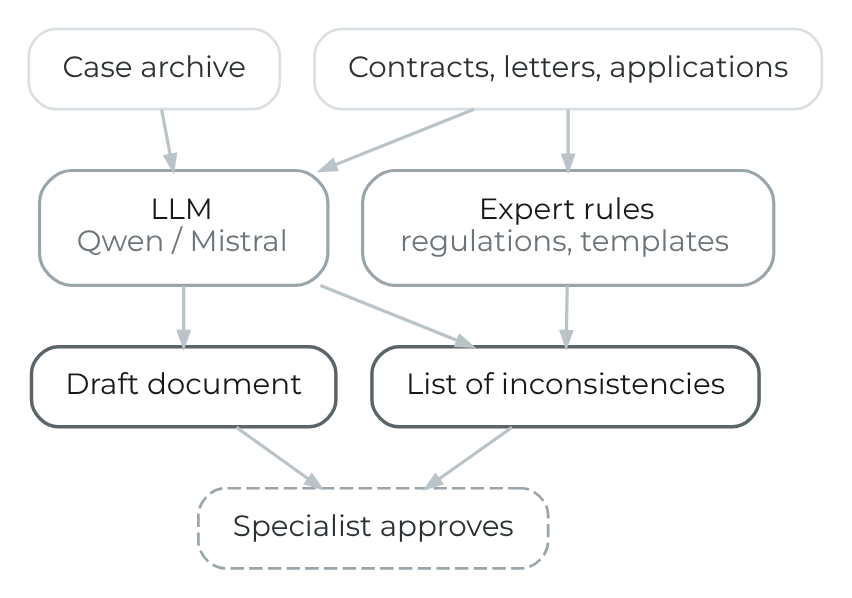
In law firms and accounting and HR departments, the system prepares draft documents and flags inconsistencies; the final decision is made by a specialist.

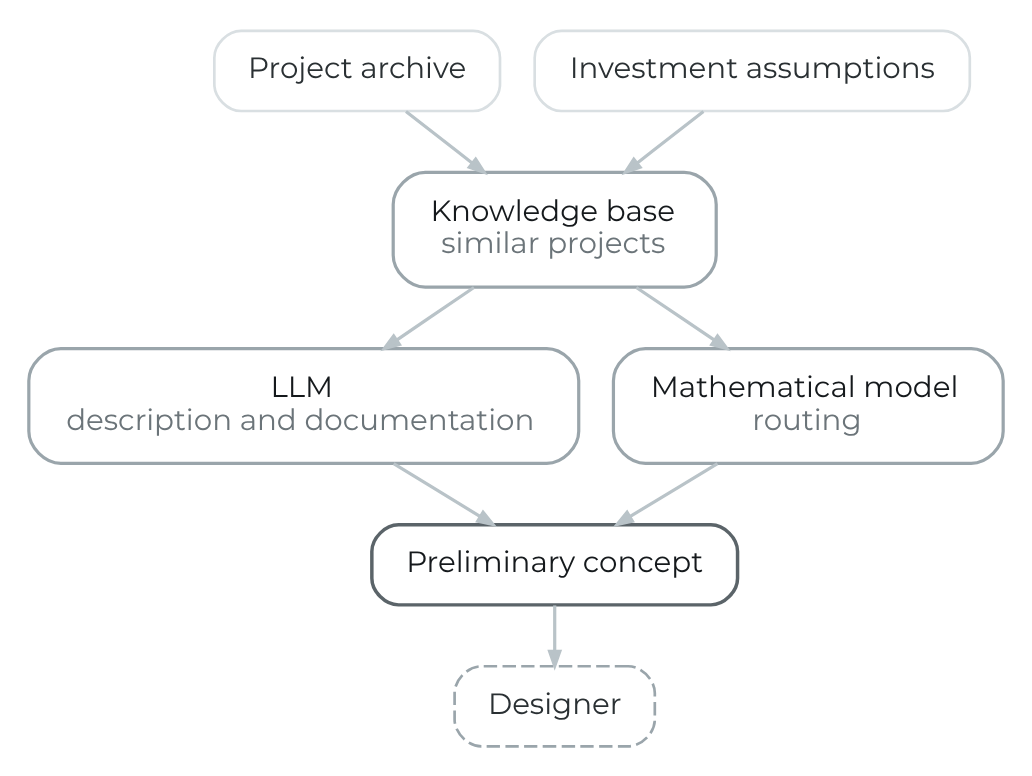
Based on completed projects, the model prepares preliminary concepts for HVAC and gas installations, shortening the concept phase.

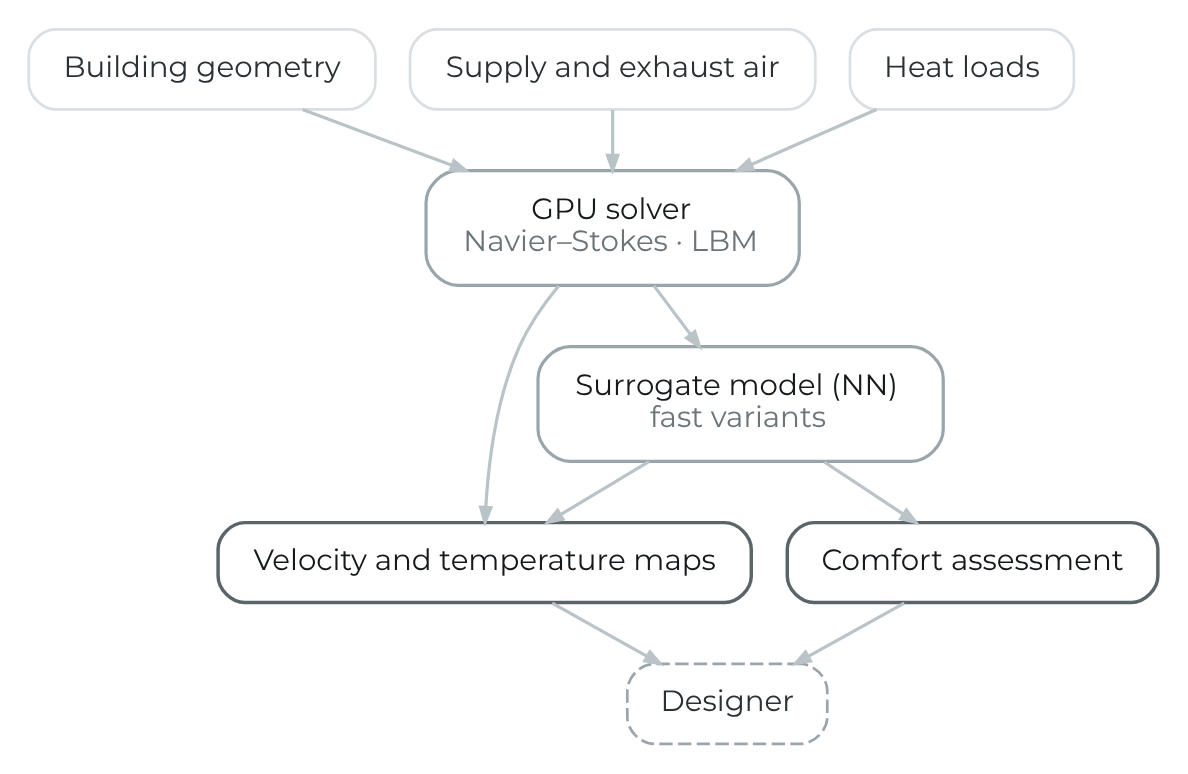
A Navier–Stokes solver running on a local GPU computes the velocity and temperature distribution in rooms for successive installation variants.

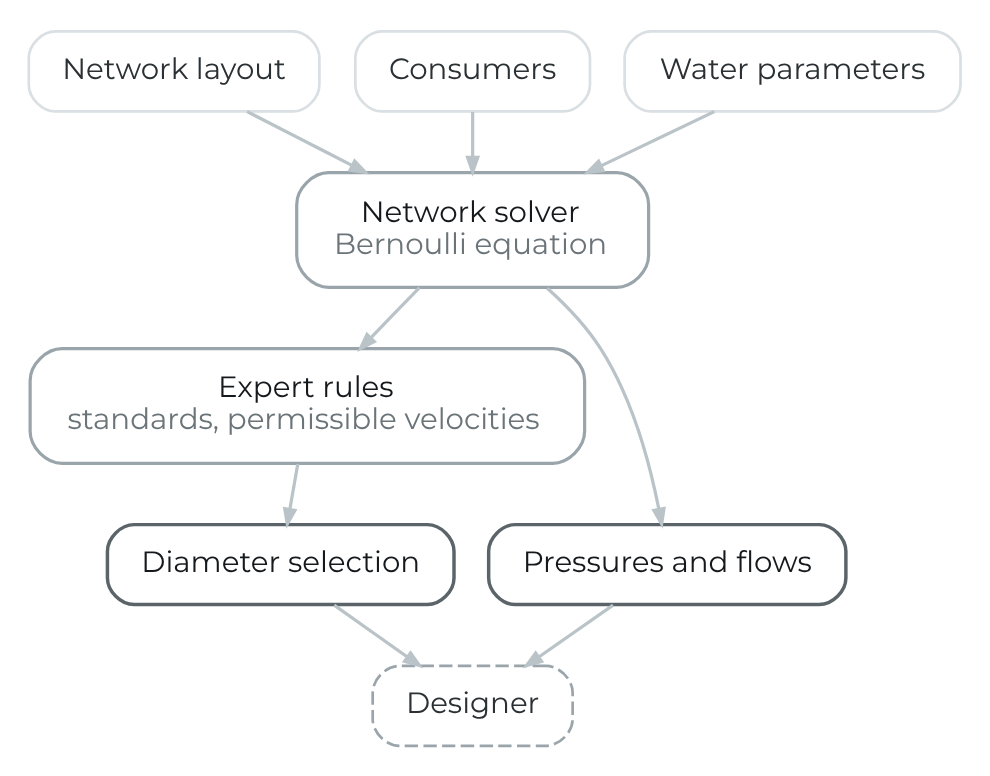
A flow model based on the Bernoulli equation determines pressures and flows in the network, and expert rules check compliance with requirements.

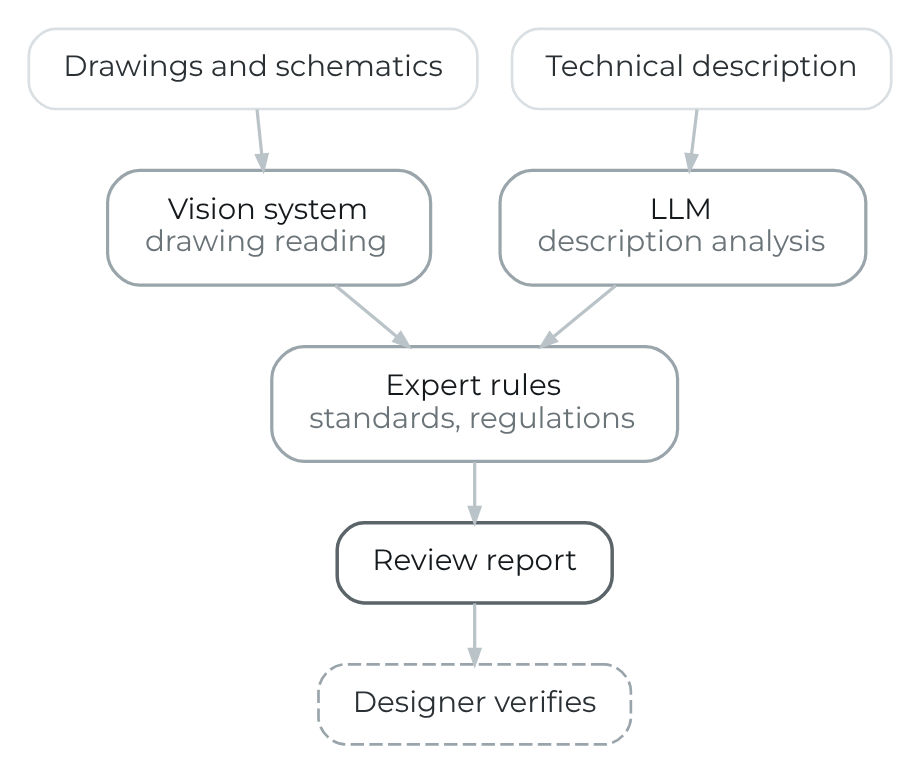
Expert algorithms and language models compare the design with applicable standards and with previous projects, pointing out possible errors and inconsistencies.

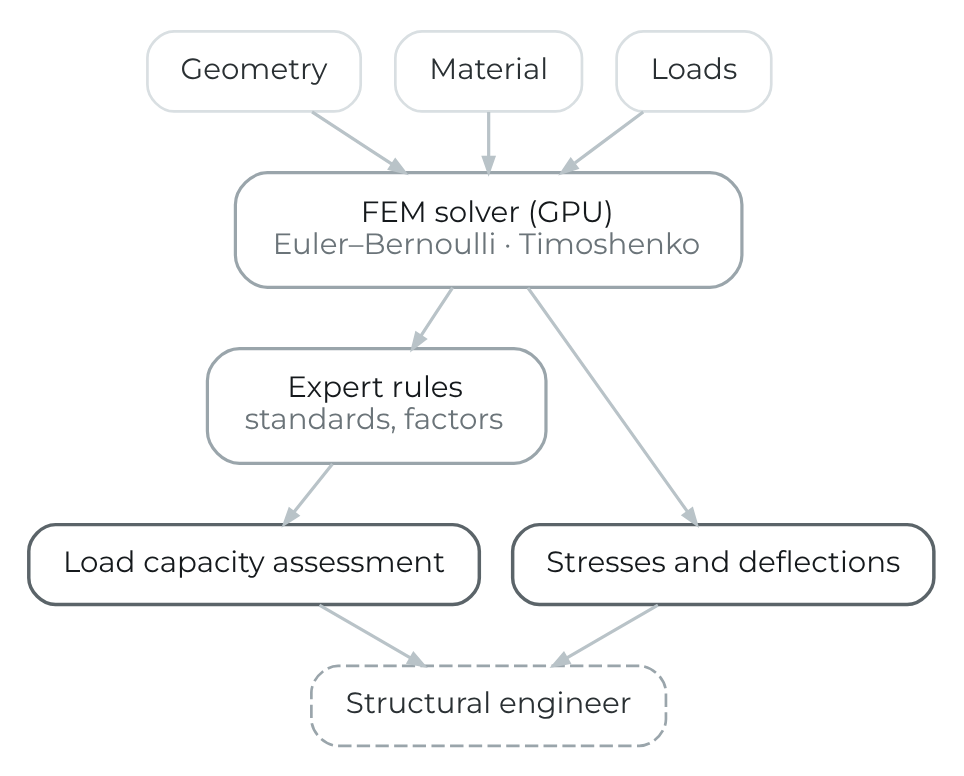
Finite element calculations using Euler–Bernoulli and Timoshenko beam models determine the stresses, deflections and load capacity of a structure.

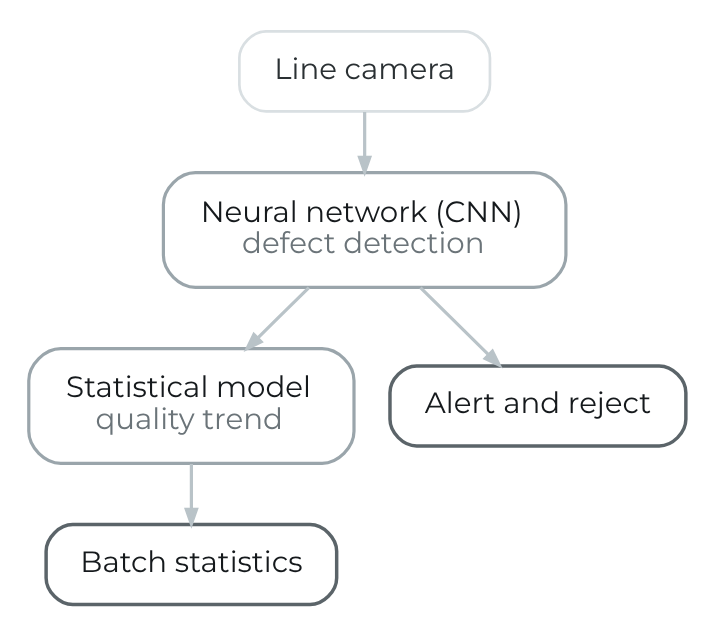
Vision systems detect defects and deviations in the production process and track quality parameters over time.

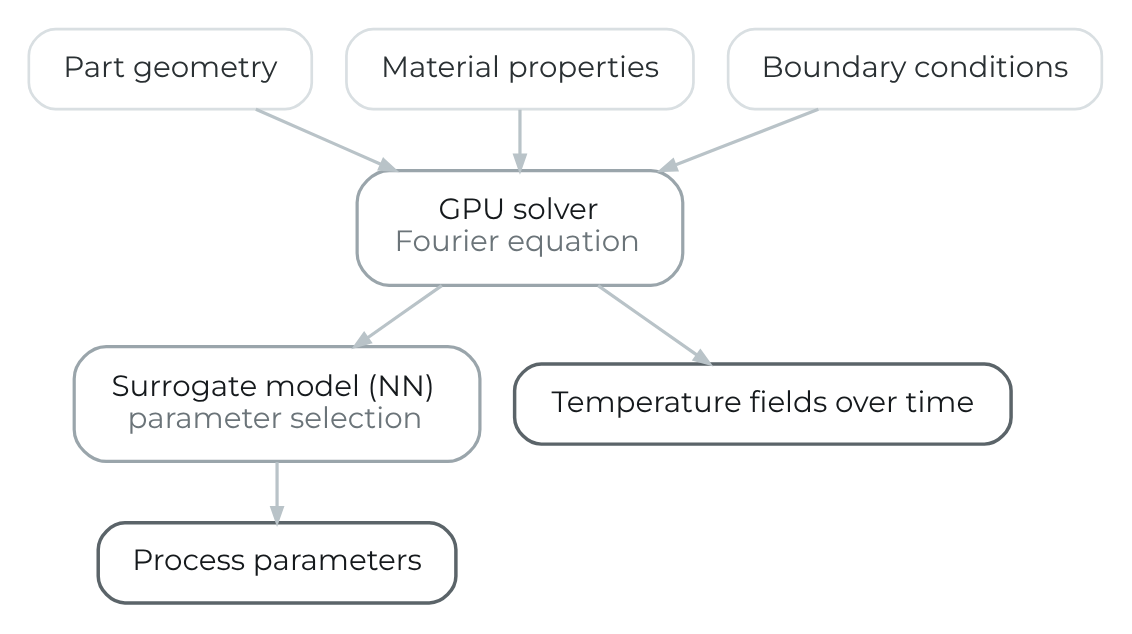
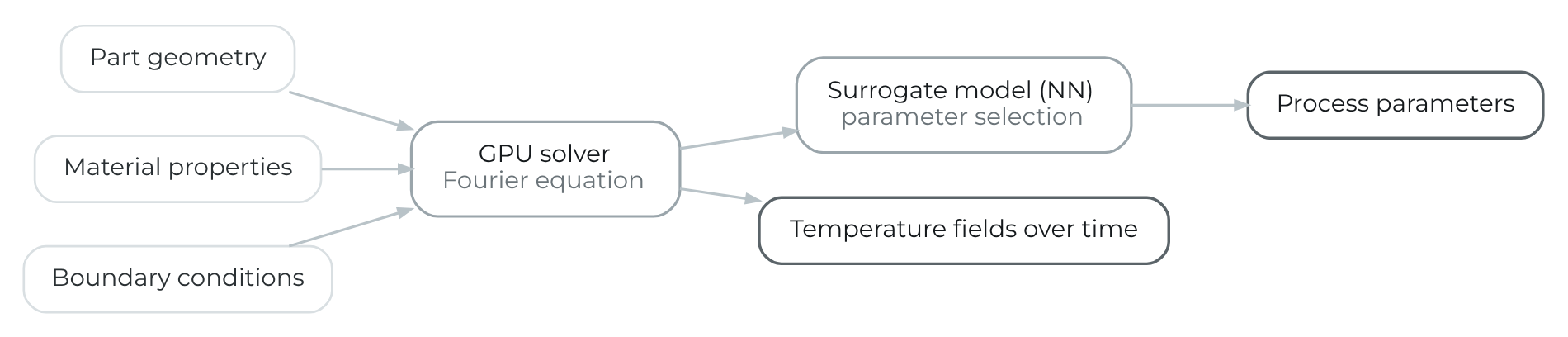
Solving the heat conduction equation describes the heating and cooling of parts in production processes.
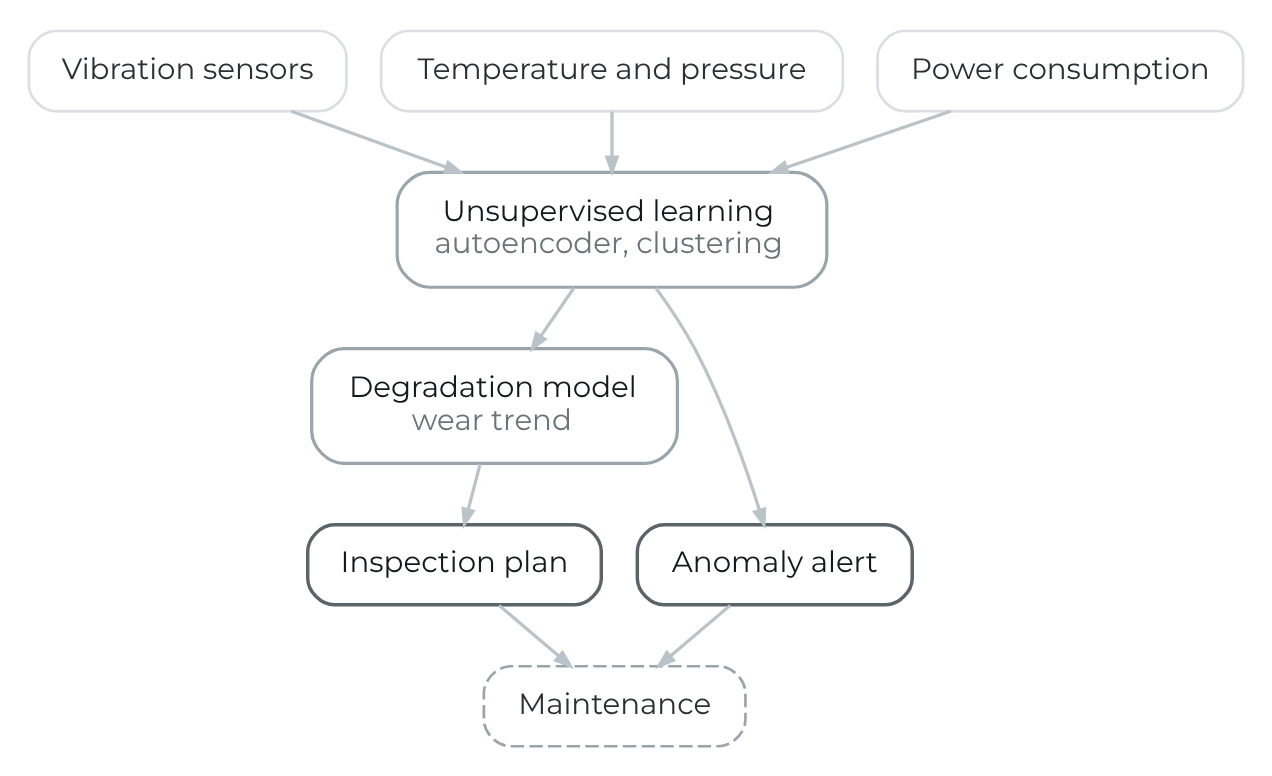
Unsupervised learning establishes a pattern of normal machine operation from sensor data and points out deviations indicating progressive wear — without needing previously labelled failures.

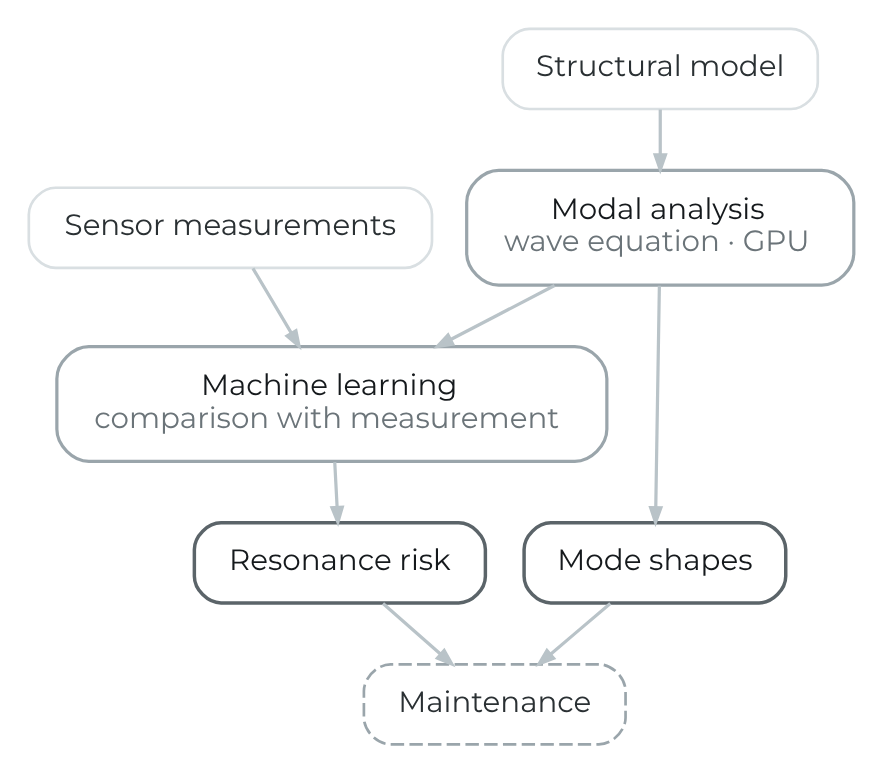
Modal analysis determines the natural frequencies of a structure, and comparison with sensor measurements reveals resonance risk and changes in technical condition.

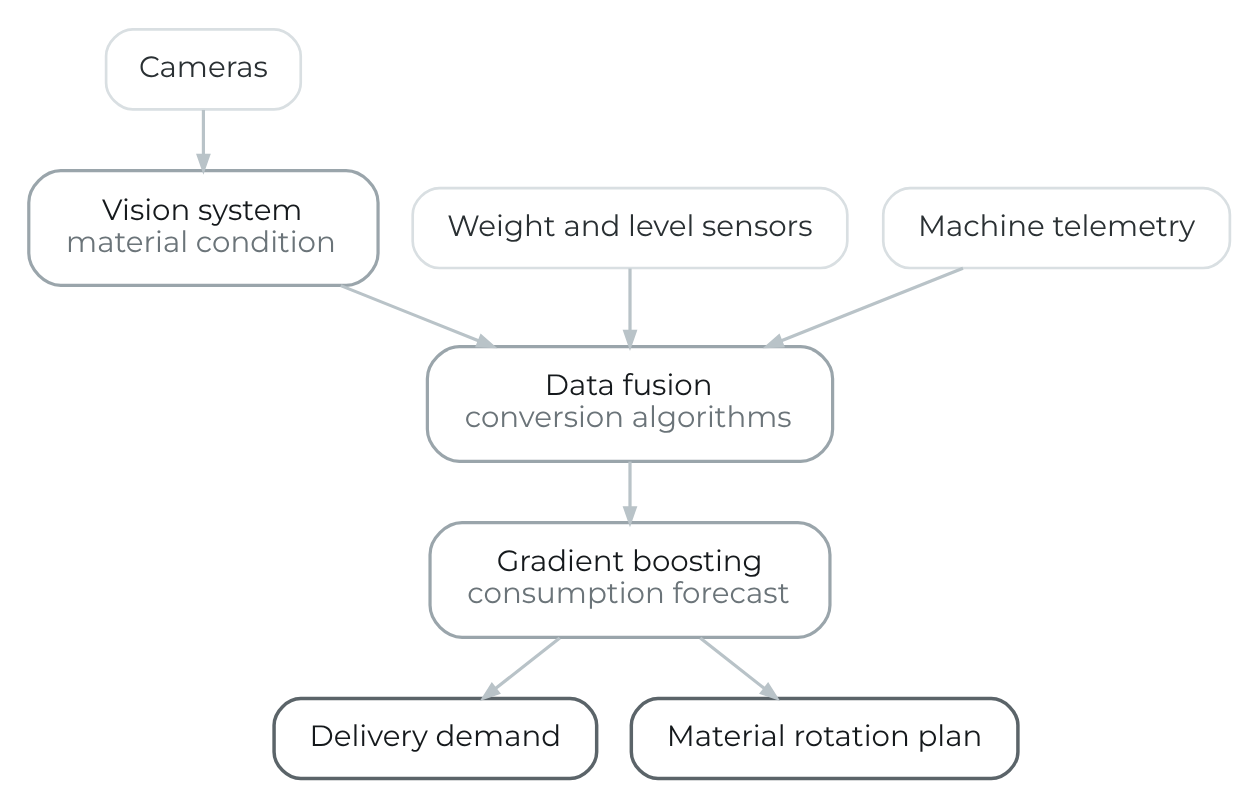
Data from cameras, sensors and machine telemetry is combined and processed by algorithms that determine material consumption, required deliveries and stock rotation.

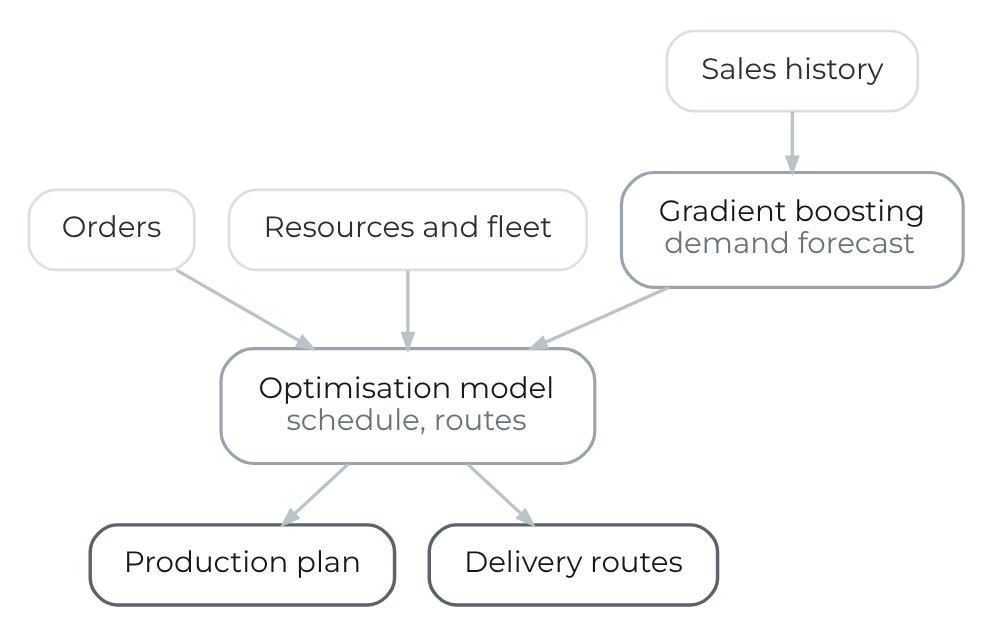
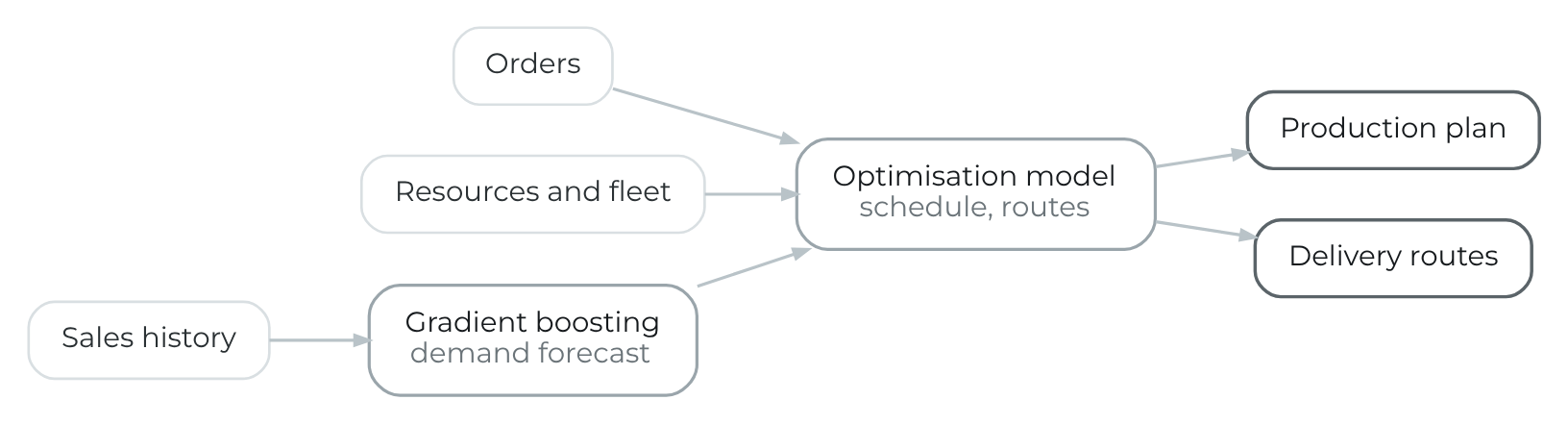
Mathematical models and machine learning support production planning, route planning and order fulfilment.
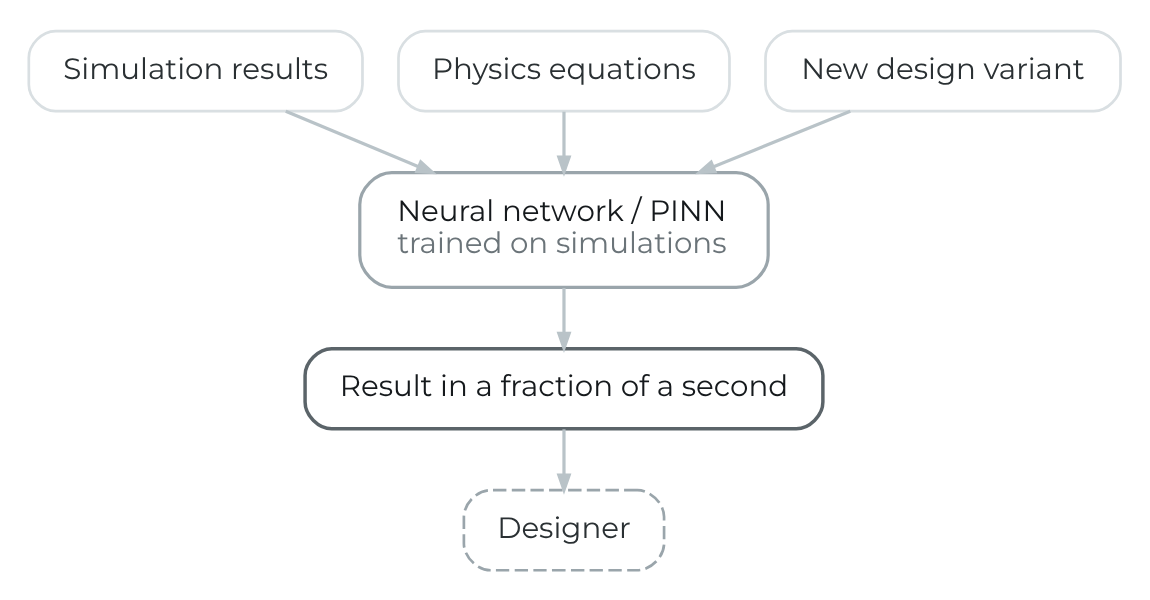
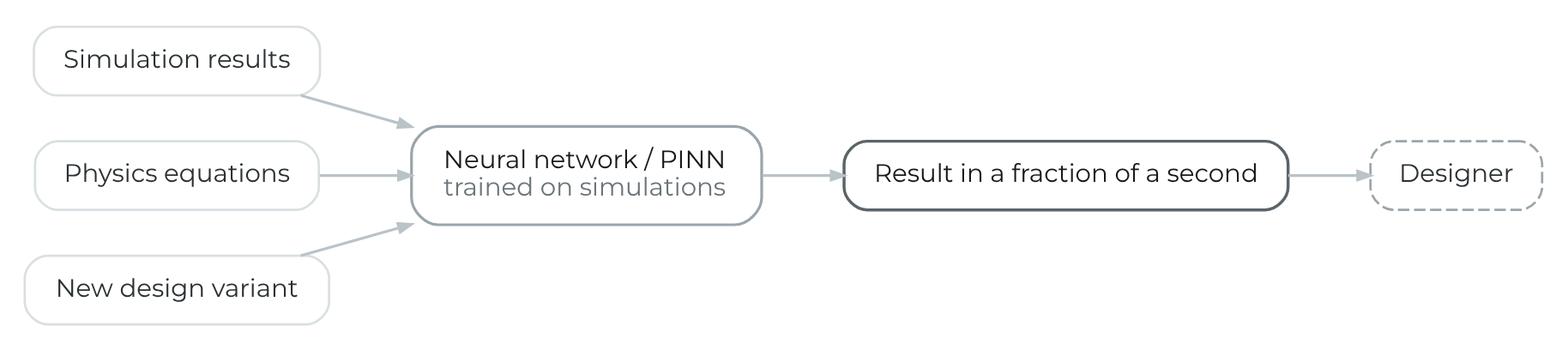
A neural network trained on simulation results or directly on the physics equations (PINN) gives an answer for new variants almost instantly.
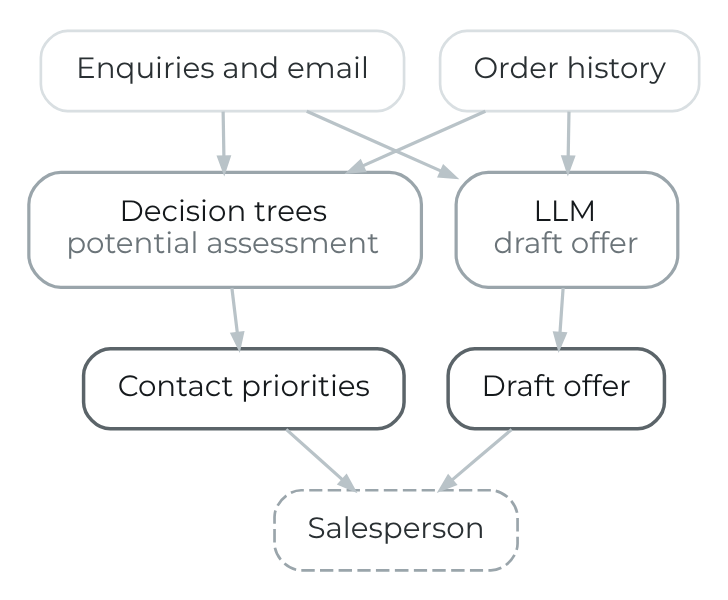
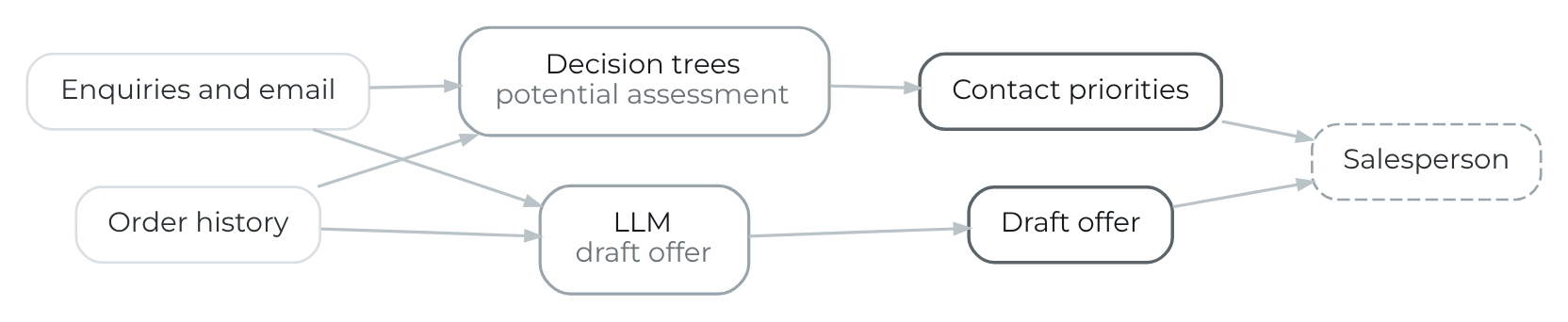
Mechanisms that capture enquiries, prepare draft offers based on previous projects and shorten the time salespeople spend on routine work.
Analysing the distribution of tasks and resources makes it possible to detect overloads, bottlenecks and situations that force work under time pressure early on.

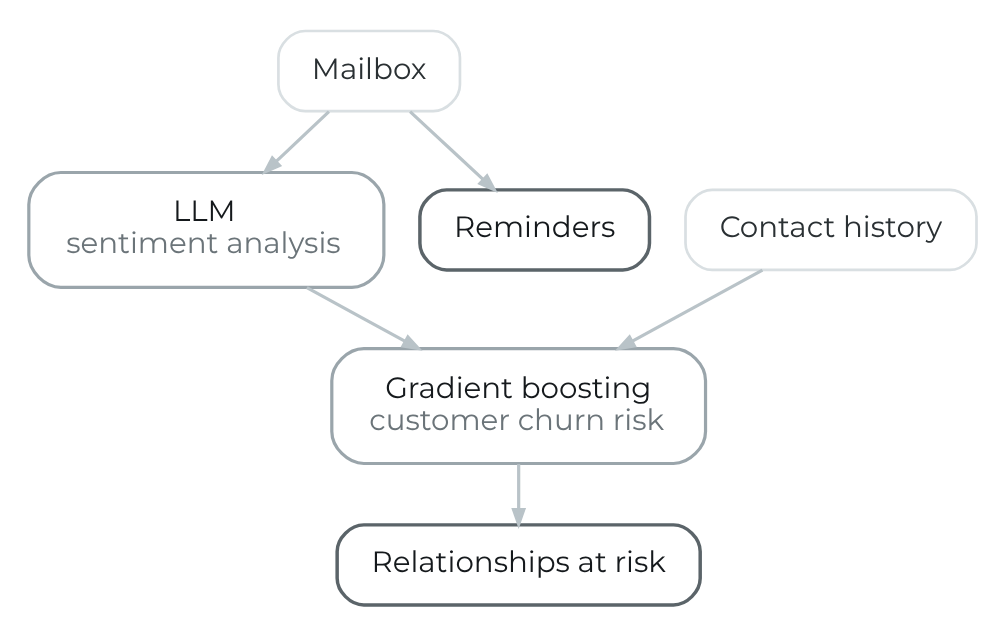
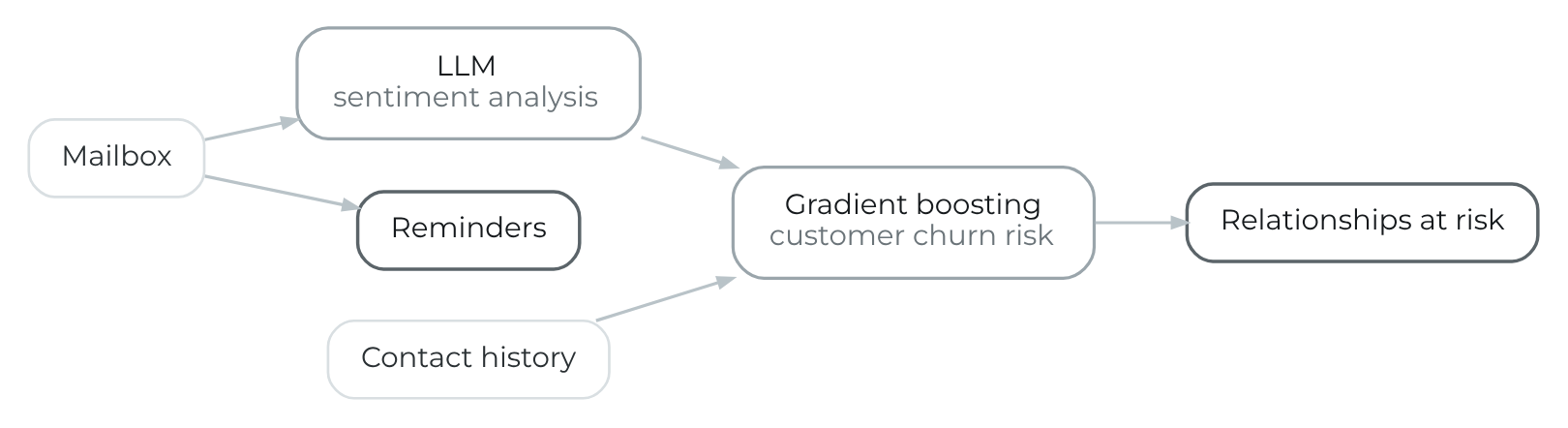
Based on customer behaviour known to the company, the system identifies relationships at risk, unanswered messages and changes of tone in correspondence.
We select and install a solution that fits the company’s needs and budget: from existing hardware, through rental, to new computing units, including leasing.
Using the servers and staff workstations you already have — upgraded if needed, e.g. with an additional GPU or memory.
Rented GPUs or a VPS as an interim solution during the prototype stage, until you buy your own hardware.
Compact GPU units with 96–128 GB of memory (e.g. NVIDIA GB10) or tower workstations — large models directly in the office.
ul. 11 Listopada 11/121C
40-387 Katowice, Poland
ul. Hoża 86/410
00-682 Warsaw, Poland
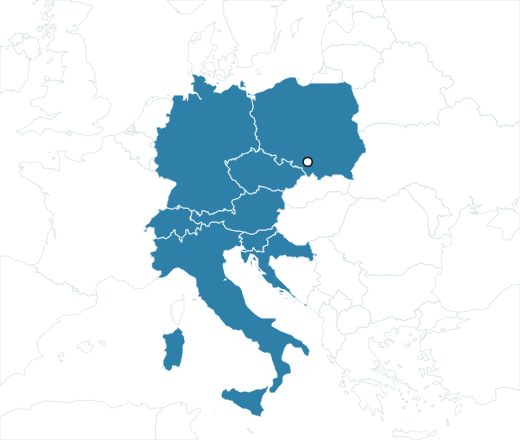
Poland, Germany, Czechia, Austria, Switzerland, Italy, Slovenia, Croatia
Office in Katowice
We work in Polish and English.
We use necessary cookies to make the website work properly. With your consent, we may also use analytics cookies that help us improve the website. Details are in our privacy policy.